 Request A Quote
Using the right web design software means building a modern website no longer requires a degree in computer science or weeks of writing complex backend code. Whether you are an entrepreneur launching a startup, a freelancer building a portfolio, or a business owner looking to expand your digital footprint, having the right software changes everything. The digital landscape has evolved significantly, bringing smarter, faster, and more intuitive platforms to market.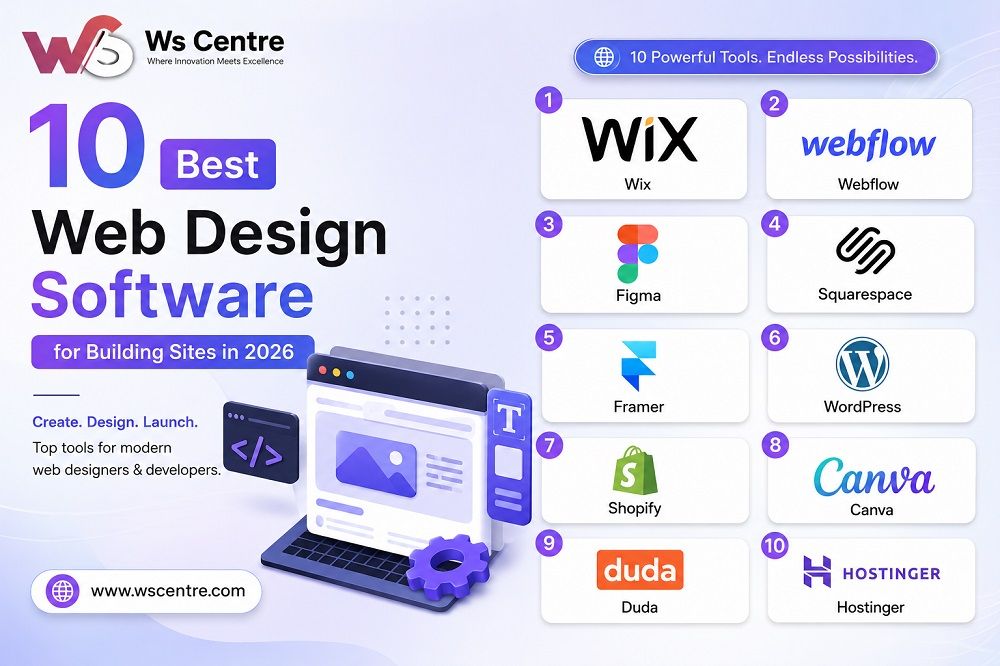
Choosing the right platform can feel overwhelming with so many options available. If you ever find yourself needing expert guidance or custom development tailored to your exact brand requirements, partnering with a trusted professional team like the Best Web Designing Company can save you both time and resources.
Below, we explore the top 10 web design software choices that are dominating the industry, offering unmatched flexibility, stunning visual interfaces, and cutting-edge features.
- Wix (Best All-Around Platform for Beginners and Small Businesses)
Wix has consistently maintained its position as a market leader for individuals and growing businesses who want complete design freedom without dealing with code. Known for its intuitive drag-and-drop editor, Wix allows you to place any element anywhere on your canvas with pixel-perfect precision.
- Key Features: Over 800 designer-made templates, an advanced artificial intelligence site generator, robust e-commerce tools, and a massive app market for seamless integrations.
- Best For: Users who want a balanced mix of ease-of-use and deep design customization.
- Webflow (Best for Professional Designers and Advanced Customization)
Webflow bridges the gap between visual design and clean, production-ready code. Instead of writing HTML and CSS manually, you design visually while the software generates the underlying code automatically. It gives you absolute control over layout structures, animations, and responsive breakpoints.
- Key Features: Advanced CSS grid controls, custom interactions and micro-animations, built-in content management systems (CMS), and top-tier hosting performance.
- Best For: Professional designers, agencies, and ambitious brands looking for unique, high-performance websites.
- Figma (Best for Collaborative UI/UX Prototyping)
While Figma is technically a collaborative interface design and prototyping tool rather than a live site builder, it is the undisputed industry standard for planning a website before a single line of code or builder block is touched. Teams can work together on the exact same canvas in real time.
- Key Features: Cloud-based live collaboration, component libraries, auto-layout features, and extensive developer hand-off plugins.
- Best For: Design teams and multi-person projects requiring detailed visual planning and prototyping.
- Squarespace (Best for Visual Storytellers and Portfolios)
Squarespace is universally celebrated for its award-winning, visually striking templates. It handles typography, whitespace, and imagery harmonization better than almost any other platform on the market, making it a favorite for artists, photographers, and premium lifestyle brands.
- Key Features: Fluid Engine drag-and-drop grid system, pristine mobile responsiveness, built-in blogging tools, and high-end e-commerce capabilities.
- Best For: Creatives, portfolios, and businesses that rely heavily on aesthetic appeal.
- Framer (Best for Interactive Web Animations)
Framer has taken the design world by storm by allowing creators to build stunning, highly interactive websites using a workflow that feels very similar to graphic design tools. It excels at complex scroll-based animations and fluid transitions that make a site feel alive.
- Key Features: Freeform canvas, advanced component states, lightning-fast publishing, and native localization support.
- Best For: Creative portfolios, tech startups, and modern landing pages that require unique motion design.
- WordPress with Elementor (Best for Ultimate Control and Scalability)
WordPress powers a massive portion of the internet. When paired with a visual page builder like Elementor, it transforms into an infinitely customizable machine. You get the robust power of an open-source content management system paired with visual drag-and-drop design flexibility.
- Key Features: Tens of thousands of plugins and themes, complete ownership of your data, deep SEO capabilities, and full e-commerce integration via WooCommerce.
- Best For: Bloggers, large content sites, and businesses wanting long-term scalability without platform lock-in.
- Shopify (Best Dedicated Software for E-commerce Stores)
If your primary goal is to sell products online—whether physical goods, digital downloads, or services—Shopify remains the gold standard. It is engineered from the ground up to handle inventory, secure checkouts, shipping logistics, and customer management effortlessly.
- Key Features: Shopify Magic AI tools for product descriptions, secure payment gateways, thousands of conversion-focused apps, and reliable multi-channel selling.
- Best For: Dedicated online retailers ranging from small boutiques to enterprise-level stores.
- Canva (Best for Quick, Simple Landing Pages)
While most people recognize Canva as a graphic design platform for social media posts, its website builder capability has grown immensely. It allows users to turn presentations or simple multi-page layouts into published websites within minutes.
- Key Features: Massive library of free graphics and stock photography, extremely shallow learning curve, and instant publishing.
- Best For: Absolute beginners, event pages, or simple personal links who need a web presence immediately.
- Duda (Best for Agencies and Client Management)
Duda is purpose-built for web professionals and digital agencies that manage dozens or hundreds of client websites. It offers powerful white-labeling features, allowing agencies to brand the entire platform under their own corporate identity.
- Key Features: Client management dashboards, widget builders, team collaboration permissions, and exceptional page-loading speed optimization.
- Best For: Freelancers and digital agencies building sites for multiple external clients.
- Hostinger Website Builder (Best Budget-Friendly Option)
For individuals working with tight financial constraints, the Hostinger Website Builder offers an incredible balance of affordability and clean design capabilities. Backed by intuitive AI tools, it lets users spin up structured business pages or portfolios quickly without breaking the bank.
- Key Features: Extremely low entry pricing, AI heatmaps to predict user behavior, built-in blogging tools, and effortless setup workflows.
- Best For: Budget-conscious starters, local service providers, and side hustlers.
How to Choose the Right Software for Your Project
Selecting the right platform depends entirely on your specific goals, technical comfort level, and long-term vision. If you need a simple portfolio or local business page up by tomorrow, drag-and-drop tools like Wix or Squarespace will serve you wonderfully.
However, diving into these platforms and setting up your design layout can sometimes get confusing or overwhelming. If you face any trouble or technical difficulty while using these tools, you do not have to struggle alone. You can easily reach out to us for expert assistance, and our professionals will help you smooth out the process. For any advanced adjustments, custom layouts, or complete project execution, collaborating with a specialized regional partner such as the Best Web Designing Company In Delhi Ncr can ensure your digital infrastructure is engineered for maximum conversion and success.
 Have a project in mind? Get in Touch